Designing a new app for ReminderX
Mar 13 – May 7, 2017
DEMONSTRATED SKILLS FOR THIS PROJECT
- Create a Project Proposal
- Define customer segment for the product and recruit users for research
- Develop a research protocol that includes product description and questions about participant needs, goals, and desires
- Run in-person and virtual research sessions (interviews)
- Report key findings, analysis, and recommendations
- Develop a target Persona for the product and design tenets
- Sketch low fidelity workflows, wireframes, and wireflows that illustrate key tasks
- Provide clear and actionable peer feedback
- Iterate designs and annotate based on received feedback
- Create test plan and materials (paper prototypes) for design assessment
- Run and record test sessions with 4 users
- Document the design assessment clearly yet concisely for stakeholders
- Draft a final design deliverable
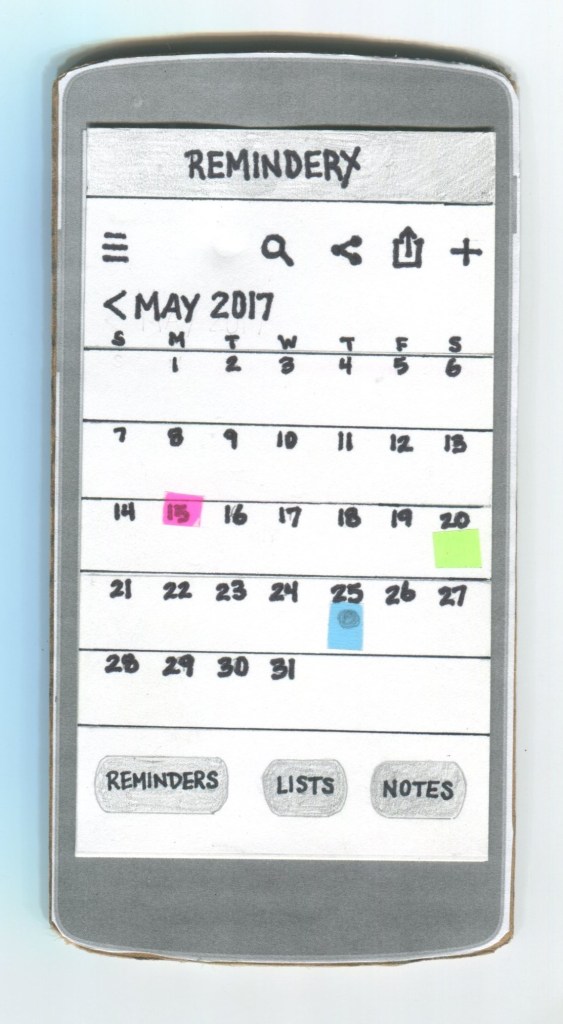
Scenario
As a first dive into the process of User Experience Design, my UXD in Practice class was asked to redesign ReminderX, a fictitious to-do list app indistinguishable from the reminder software you’d find pre-installed on your iPhone. Company co-founders needed a fresh design concept that would distinguish their product from the competition, and I set out to help them forge a new direction for the mobile app.
My Process
I crafted a 6-week plan to overhaul ReminderX applying a solid, user-focused approach, including details about the scope, activities, and timeline for the project.
Project Goals
- Solve the problem of product direction by identifying and defining target users, conducting research to discover what those potential customers really need the product to do.
- Design an experience that customers return to not only because the product helps them achieve their goals, but also because they enjoy using it.
User Research: 4 Interviews and a Persona
I recruited 4 potential ReminderX users to participate in research interviews to uncover their attitudes, behaviors, and goals for performing reminder, list making, and note-taking tasks. I also viewed participants’ calendars and observed the way they typically schedule reminders for themselves and their families.
What I discovered in these interviews is that people don’t use reminder apps (built-in or third party) because setting a reminder divorced from their daily schedule isn’t helpful. The most important underpinning of a reminder is time, and human beings measure time using calendars. The calendar, whether it be the shared family wall calendar updated daily by a harried mom of two or the jam-packed Google calendar of a busy attorney, is the framework people operate within to set their schedule, organize tasks, and record upcoming events. Thus, the most intuitive way to set a reminder is to integrate it with the calendar. The ReminderX target persona was born of this key insight.

Design and Iteration
My goal for the ReminderX design was to devise a process that aligned with human rather than machine logic. I asked myself, “What would be the most natural way to remind yourself not to forget something important? What would that process look like?” Results of user interviews revealed the need for a product sophisticated enough to appeal to Google calendar folks, but with a low learning curve for “wall calendar” people.
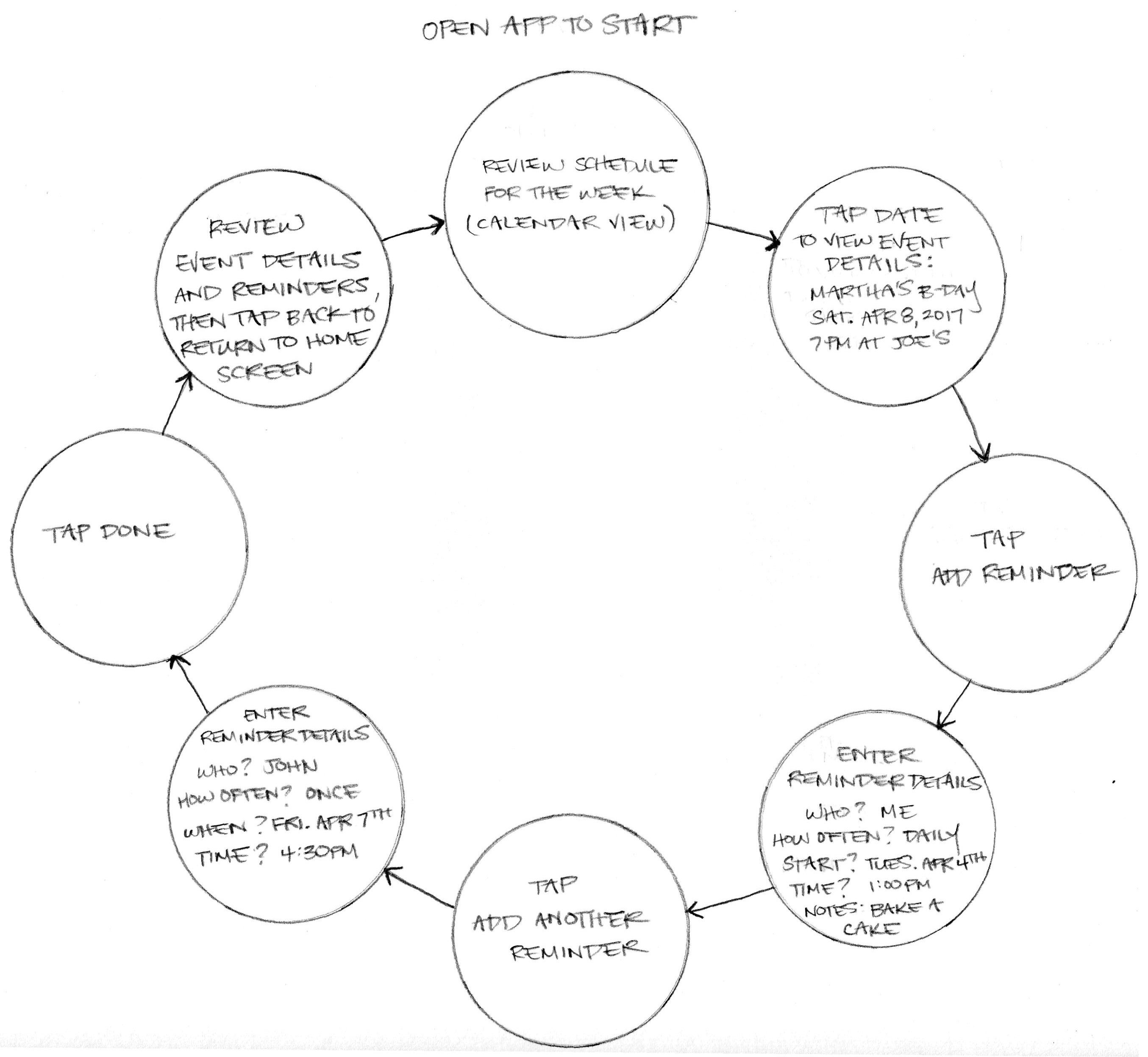
To be effective, the design would not only enable users to set up reminder alerts, but would also need to:
- allow users to sync their existing calendars and contacts for use within the app
- enable advanced list creation with optional coupon-clipping
- support a “nag” feature in the form of repeat reminders for self and others
- possess robust sharing capabilities that match the fluidity of sending a text
- permit color-coding for different event types
- include an option to upload files, photos, and other lists
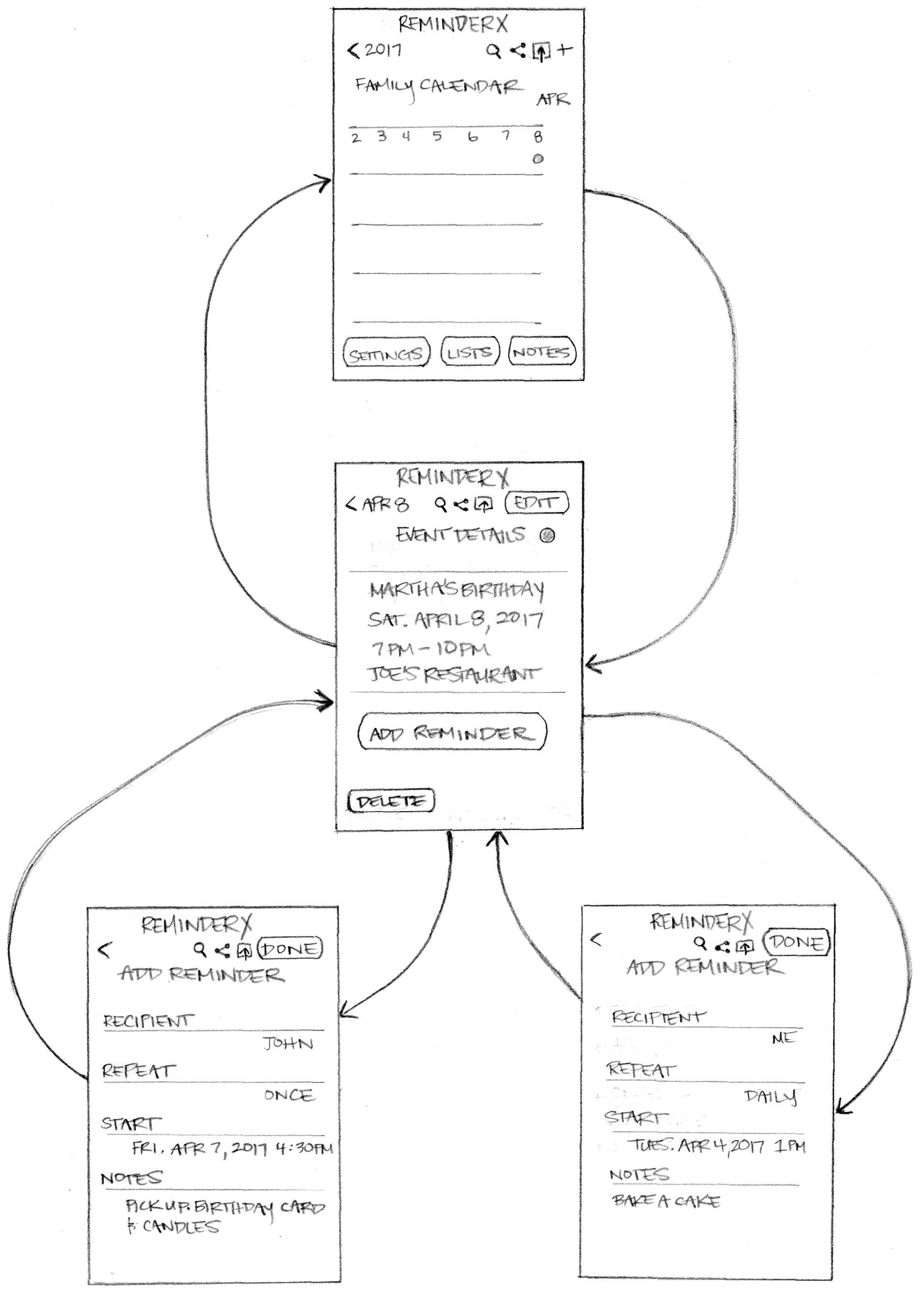
These added capabilities would lead to increased adoption and help ensure the success of the company. An app with one or two of these features might fill a certain niche, but an app with all of them would be the Swiss army knife of organization tools. I called it the ReminderX Family Manager app, a name which has a rather clunky mouthfeel, but that’s what marketing departments are for, right?
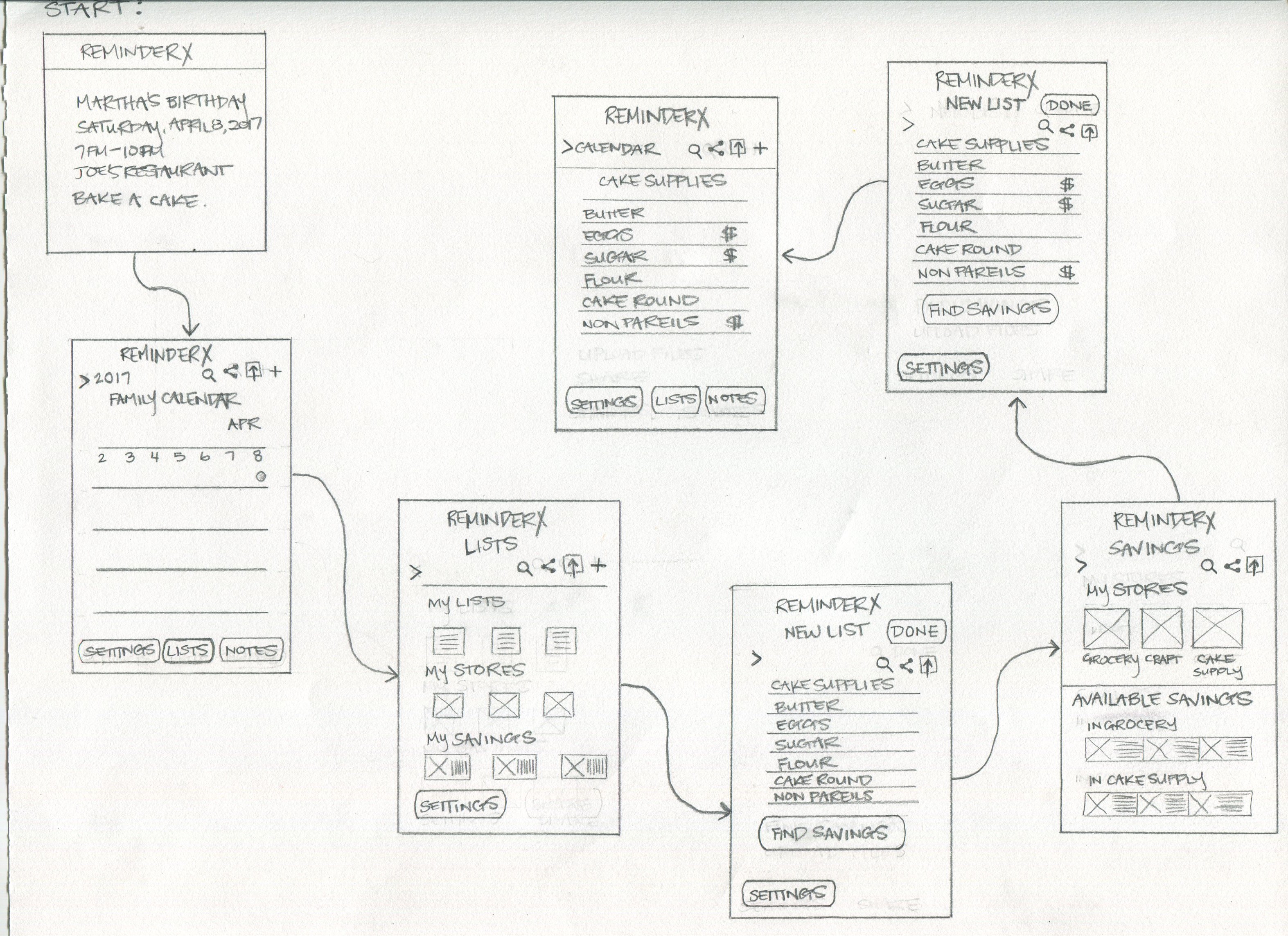
Paper Prototyping and More Iteration
To assess my design, I prepared a test plan with 9 scenarios, then conducted recorded test sessions with 4 people who were recruited based on their similarity to the target persona, Carolyn.
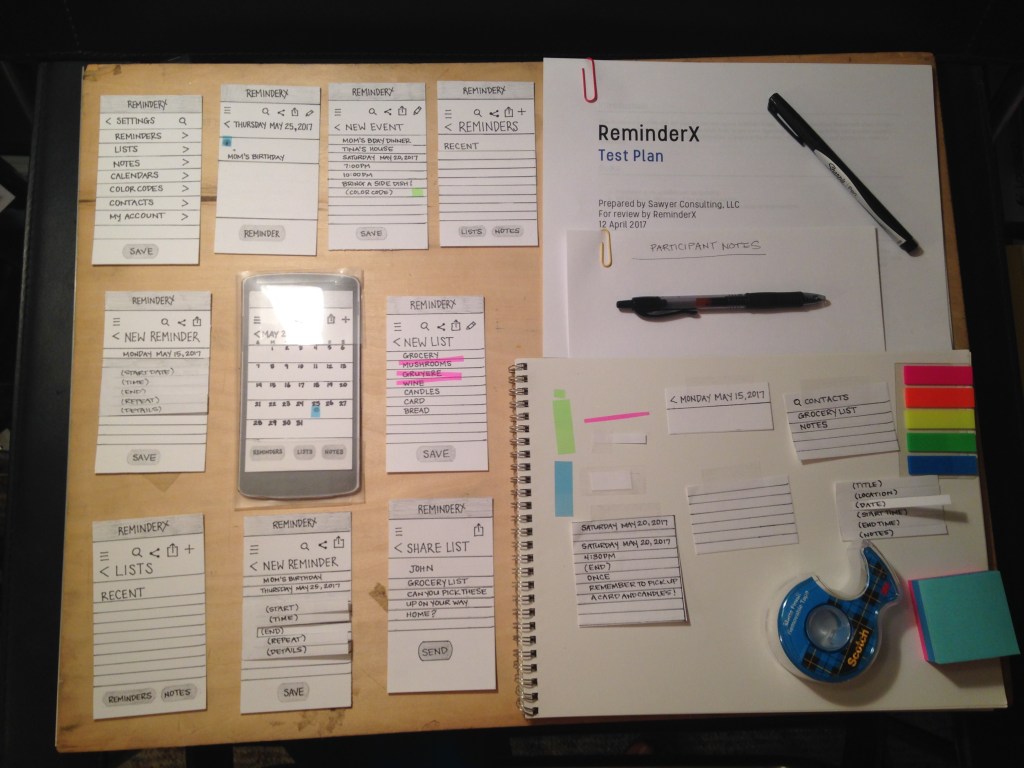
Preparing screens for live user testing revealed several workflow questions unaddressed by my initial designs. I also quickly came to the realization that the scope of my vision for ReminderX was too broad for my 6-week time frame. The complexity of the coupon clipping feature meant that it would have to be postponed for a future release. This was disappointing, because without the option to store rewards cards and add digital coupons to their lists, there is less to incentivize stalwart pen-and-paper list-makers to convert to mobile use.
One More Iteration
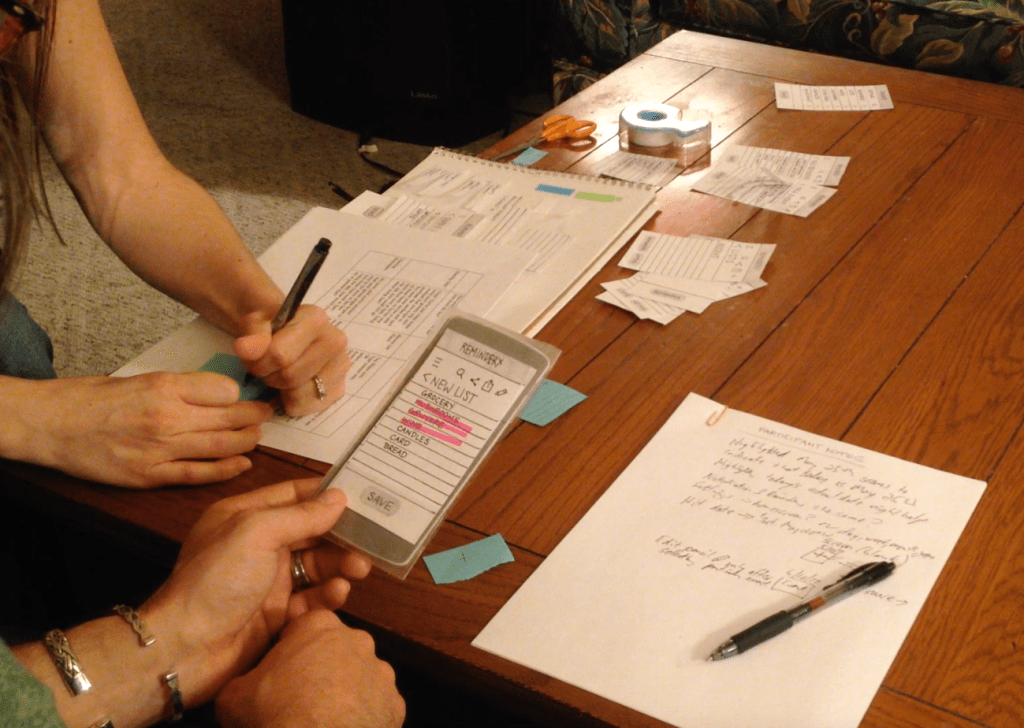
Live user testing was indispensable in helping me achieve a high level of usability. The synthesis of 4 different perspectives resulted in a sturdy yet flexible design that was not only easier to use but also more closely aligned with the company’s business goals.
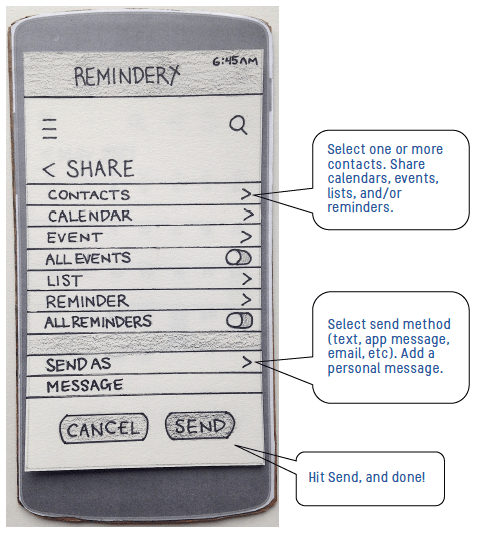
Results
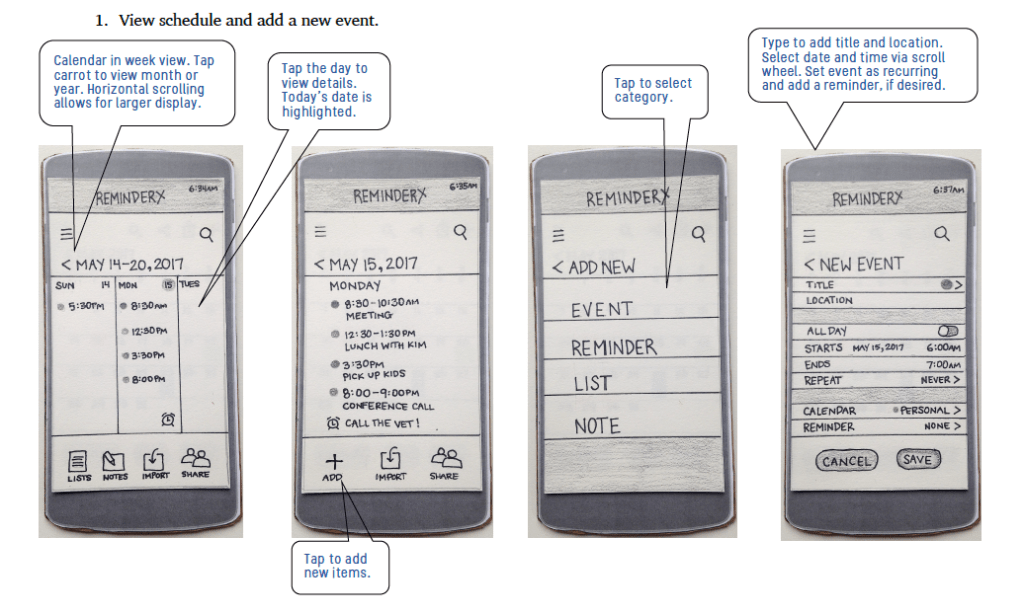
The redesigned ReminderX app is now a calendar-based family manager app that:
- Empowers users to import and sync their existing calendars and contacts for a more seamless experience.
- Allows users to set up recurring events and automatic reminders, which they may share with anyone across devices.
- Facilitates more intuitive list-making by allowing users to cross and uncross items on their list, import photos and other files, and share lists with family and friends.
- Gives users the option to categorize and prioritize items on their calendar using a customizable color-coding feature.
Lessons Learned
- An interview is a conversation, not an interrogation.
- Don’t romanticize your design.
- Iteration isn’t just for end users. Test the design on yourself first.
- There is no substitute for live user testing.
- People are unpredictable, so expect the unexpected.
- Measure thrice, cut once.

 Anne Sawyer