A quick-and-dirty content redesign for Current by GE
July 3 – Aug 19, 2017
DEMONSTRATED SKILLS FOR THIS PROJECT
- Understand and summarize the organization’s goals and top-priority audience needs
- Perform a content audit of the organization’s website
- Leverage web analytics to assess content use
- Report recommendations: what to keep, delete, add new, and how to promote content

Scenario
As part of my graduate work in Content Strategy, I helped Current, a small energy company operating out of the B2B arm of General Electric, wrangle the content on their website. As a scrappy newcomer to Industry 4.0, Current stakeholders wanted to use their web presence to generate leads and establish the company as the authority for lighting and energy solutions for their target audiences: C-level executives in factories, offices, cities, and stores.
My Process
Assessing the current state of Current’s content Hub
Anyone who has written for the web knows that it’s very easy to produce content, but managing that content once it’s “out there” is less straightforward. At the time, Current’s website was a wild West boom town of blog posts, news articles, partner profiles, customer success stories, and more. Their content wasn’t living up to same high standards as the intelligent, highly-communicative ecosystem of their products and partners.
Understanding the information needs of Current’s potential clients
To help Current with its content, I needed to tease out the underlying issues with respect to the needs and perspective of their customers. I started out by taking a closer look at the personas that comprise their 3 major C-suite audiences:
For Chief Operations Officers (COOs), efficiency is key.
They expect it from their teams, and they also expect it from their content. How can Current deliver content to this customer that will not only grab their attention, but also help them see the possibilities of energy savings from LED and solar?
Chief Information Officers (CIOs) need people to understand what their company’s technology can and can’t do.
They might be looking for more skew-level product information as well as what kinds of technology will help their company save money and work the way it’s intended. How can Current tell them about the data solutions available via sensors and apps in a smart office lighting system?
Chief Marketing Officers (CMOs) need creative ways to showcase their stores and product lines.
How can Current provide these customers with lighting solutions that not only illuminate their merchandise, but do so in a more intelligent way that empowers retailers to create a one-of-a-kind customer experience?
Content Makeover: 1,753 blobs to 461 chunks
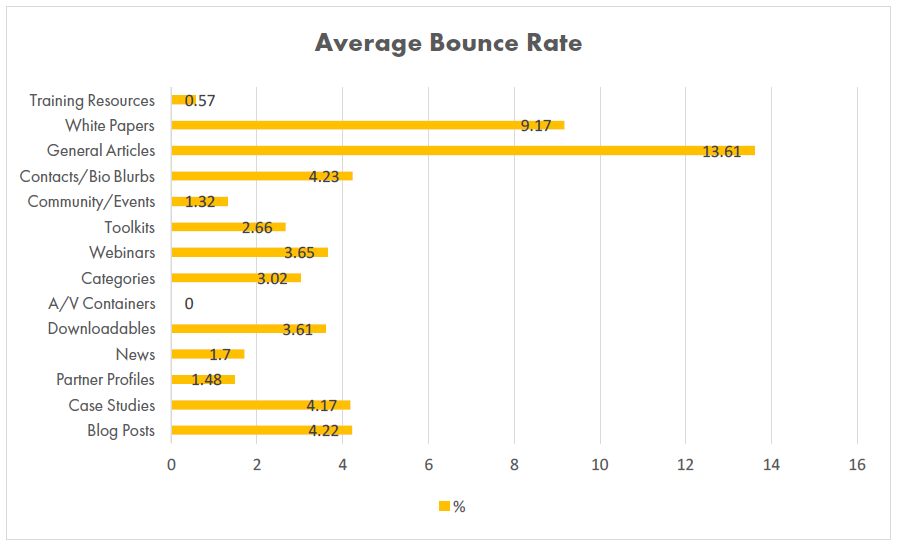
To obtain a more granular picture of the company’s content, I picked over their site analytics and performed a content audit, which allowed me to identify patterns in the content structure so I could map out content types and how they relate to each other.
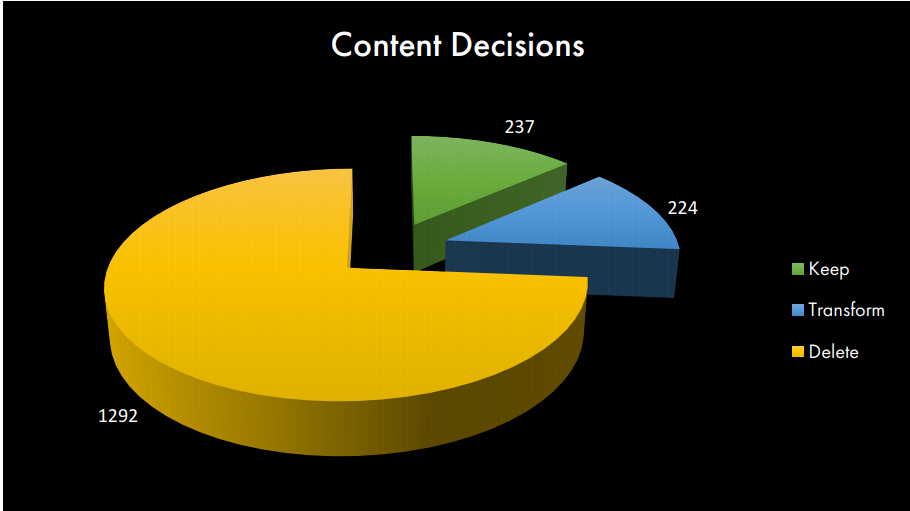
I looked for performance indicators that could tell me why one type of content might see more unique visitors than another, or what bounce rates for certain pages might say about the quality, placement, or promotion of that type of content. Running the numbers on pages based on my assessment of their quality provided a solid starting point for analysis and final recommendations.
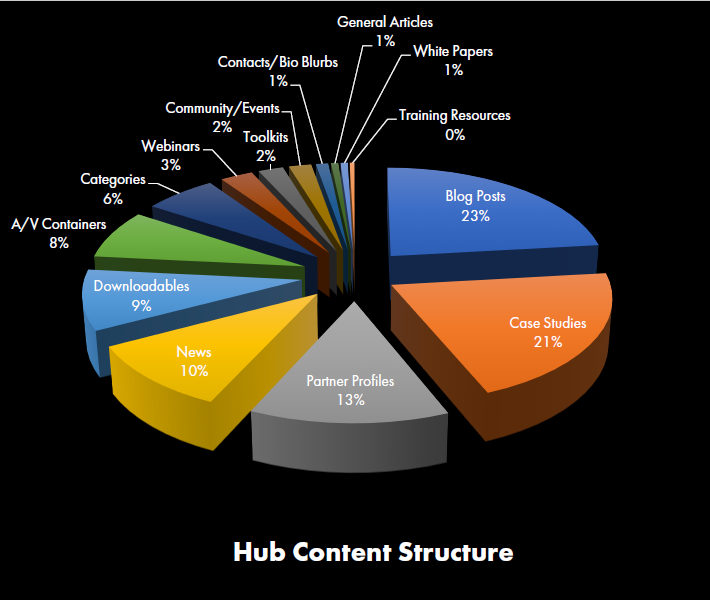
Throughout this process, I tried to see Current’s content as its customers might see it: browsing business news on their smart phone during a quick lunch break, performing searches for “smart store” on their desktop computers at work, or maybe asking an associate if she knows what kind of building automation systems can help future-proof a company. There is a lot of great information on Current’s website, but it’s no use to anyone if people don’t see it and can’t find it.
A Few Recommendations
Know your audience.
Persona development is a good first step towards understanding what users need from the organization. However, conducting qualitative user research upfront will save time, money, and a lot of headaches trying to figure what content will be most effective in driving user engagement.
Let your business goals inform your communication goals.
First, make sure your business goals are clearly defined and everyone in the organization can recite them in their sleep. Then, develop a message architecture based on these goals. A simple 45-minute card sorting exercise can help stakeholders establish who Current is, and what the organization needs to say with its content.
Content first.
Develop and document a holistic content strategy. This will provide the operational framework for future content decisions and digital initiatives.
Cut out the fat for a lean, mean content machine.
Conducting regular audits and qualitative assessments will give the content team a clear picture of what they have and if it’s any good.
Four things I know now that I didn’t know before.
Pure, unadulterated user research may not be possible when your target audience is C-suite.
Executives are the leprechauns of user groups – they’re nearly impossible to get a hold of, and they don’t have time to talk to you about your website. Getting useful qualitative data from C-suite clients means finding creative ways to have a conversation with them.
Unorganized content is usually the result of an unorganized team.
This is why good governance is so important for effective content. The people and processes for delivering content must be structured and documented, otherwise, content will end up duplicated, in the wrong place, or with the wrong tone for the intended audience.
Content audits are so worth it.
Yes, they’re time-consuming. Yes, they make your eyeballs tired. But, once it’s finished, an audit will yield more insights and data than hours spent just browsing someone’s website.
Content Strategy is to your digital presence as mise en place is to your dinner party.
Any hostess worth her salt knows you can’t have a successful dinner party without careful preparation and keen attention to detail. Same goes for digital content. The most beautifully designed website in the world won’t help anyone if the stuff that’s in it is poorly conceived and hard to find.
 Anne Sawyer