I have always enjoyed perusing and playing with typefaces, but before this week I relied primarily on my own intuition and eye for aesthetic appeal in making decisions about where and how to use font in my academic and work-related projects. In absorbing the wealth of information about how to apply design principles to typeface as well as the historical and cultural implications of type, I now have a better handle on how to choose and pair fonts more objectively and critically. Gary Hustwit’s documentary about Helvetica was a real eye-opener on this subject. From its inception in 1957 to its widespread, almost ubiquitous use in our modern world, to various movements that have sprung up in reaction to it, I am continually amazed at the significance and influence such an innocuous font has had on Western culture. Although simple, Helvetica is anything but boring. In fact, the elegance of this typeface lies in its simplicity. The very fact that we tend not to notice its presence is precisely what makes Helvetica such a powerful medium for communicating content and ideas. Erik Spiekermann conveyed this idea with acuity in the film: “It’s air, you know. It’s just there. There’s no choice. You have to breathe, so you have to use Helvetica.”

After spending last Sunday poring over this week’s assigned readings and viewing the Helvetica film, I was inspired to start designing my own original typeface and I decided right away I would do so at least in part in homage to my father’s handwriting. Recently I uncovered a letter he wrote to me shortly before I graduated high school, which was also shortly before he passed away. Examined under the lens of typography, this artifact of my formative years reveals a wealth of information about its creator. As a font, the writing forms a modern, no-nonsense sans serif heavily influenced by the architectural styles of Walter Gropius and the Bauhaus movement as well as the Prairie style of Frank Lloyd Wright. The strokes are bold, heavy, and swift with a low center of gravity and expansive tracking between words. The font is always in uppercase with the exception of the letter F, when used as prepositional glue, and the word “and” is nearly always represented by a frugal logogram.
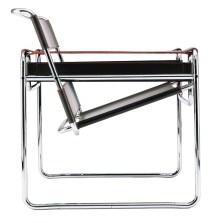
The shapes of individual letters give the type its individual character. For example, the horizontal stroke in the letter A is so low that it has virtually eliminated the letter’s legs, forming the triangular shape of an A-frame house. The letter S bears a marked resemblance to a lightning strike with its dynamic zig-zag stroke, creating a mood of tension that is occasionally relaxed by a wide, heavy curve in the lower half of the letter form. There is often a perceptible gap in the letter E between the vertical and middle horizontal stroke, a disconnect which creates rectilinear forms of the negative space, reminding me of the monochromatic Dessau Masters’ Houses. Similarly, the letter G echoes the Wassily chair design with its defined strokes and geometric cut.

The overall expression of my father’s typographic style is reflective of his life and what he valued in himself and others. He was an architect, draftsman, and designer whose military background informed his work ethic and parenting style. The values of discipline, precision, self-reliance, and economy had a sharp and profound influence on his speech and writing. In its logical extreme, this expression could be harsh, rigid, and overbearing, with no allowance for nuance or compromise. At its best, my father’s typeface conveys a mood of creativity and dynamic movement with its expansive spatial relationships, grounded by the sound architectural structure of its straightforward lines and angles.
 Anne Sawyer